
Home / Joining RKS
Places go to those who need them most
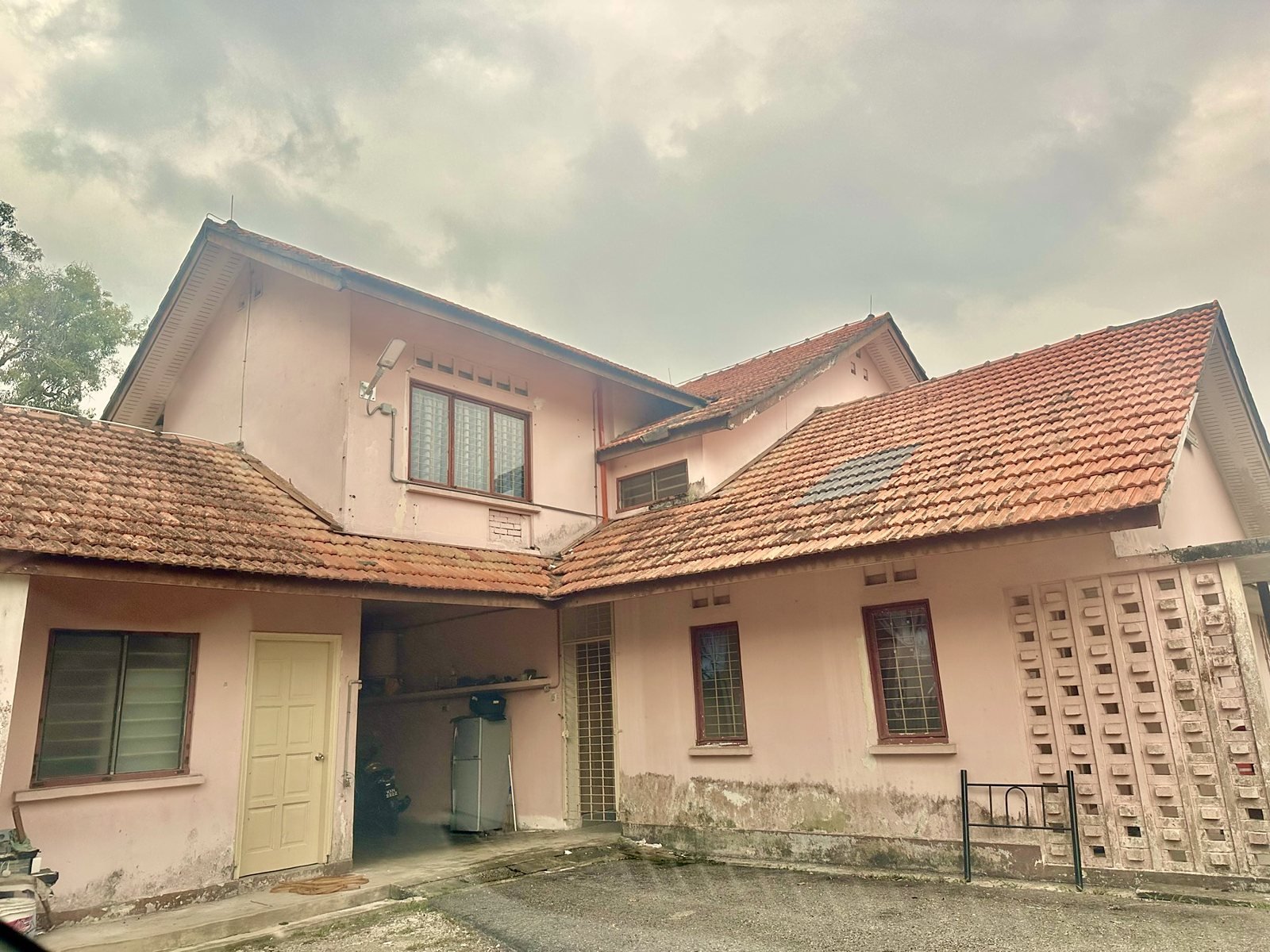
Beds are few, so each session they are offered to the students who need them most. Everything about how that works is on this page.
How it works
Fair, open and checked by you
Once a session, when the form opens.
Every application is marked against a published rubric.
Your result shows each mark, not only the outcome.
Check in with your house PIC.
Applications for 2026/2027 are closed. Dates for 2027/2028 will appear here before the form opens.
Who can apply
Four things you have to clear, then everything else is weighed.
The four below are pass or fail. Miss one and the application stops there, whatever the rest of it says.
You must
- Be a registered Universiti Malaya student for session 2026/2027. Checked against your registration status. Your programme, your faculty and your year make no difference
- Apply with your siswamail address, the one ending @siswa.um.edu.my. A personal Gmail is not accepted, because the address is how the application is tied to a real student
- Not be holding a Kolej Kediaman place for 2026/2027. If your KK result is not out yet, apply anyway. Any offer you get is conditional, and if KK comes through afterwards the RKS offer lapses and you tell JKRKS within seven days
- Have no outstanding university disciplinary record
There is no income ceiling and no income floor. Every registered UM student may apply, whatever band your household falls in. Do not rule yourself out before anyone has read your form.
What is assessed
Six things are weighed. This is all of them.
Every one is scored from a number or a fixed choice you give in the form, and what you claim is checked against the documents you upload. No panel member awards points by opinion.
The marks are published too
Below is a plain summary of the six. The full rubric, with every band, every mark and the document accepted for each, is published on its own page before applications open, and a calculator lets you work out your own score in advance.
Household income against what your household needs
Not income on its own. A published zakat needs table sets the minimum monthly sum a household of your exact composition requires, and your income is measured against that figure. It is why a large family on a middling income can be assessed as needing more than a small family on a low one. What the form asks:
- Total gross household income a month, every earner at the family home added together. Both parents if both of them work. Your own allowance is asked separately and does not go in this figure
- How many adults work, and how many do not
- How many are studying at university, including you
- How many are aged 7 to 17, and how many are 6 or under
- How many dependants are registered OKU, and how many have a chronic illness
- Whether the household pays for childcare for anyone aged 12 or under
- Whether the family home is rented or owned
Assistance your household already receives
The figure above is one you declare yourself. This block is the outside confirmation of it, which is why it needs a reference number or a letter rather than a statement. Only the strongest one you hold is counted, not all of them added together.
- Registration on eKasih
- JKM assistance, including Bantuan Anak Pelajar, Bantuan Kanak Kanak and Bantuan OKU
- Zakat education assistance from LZS, MAIWP, PPZ or a state religious council
- A household receiving Sumbangan Tunai Rahmah
- Your household income band, read from the national bands published by DOSM
What you have each month to live on
One number: the money that reaches you every month for living costs. RM170 means something very different to someone holding nothing than to someone holding a full living allowance.
- Allowance from your family
- Your PTPTN disbursement, spread across the months
- A scholarship or sponsorship living allowance
- Zakat or JKM education assistance paid to you
What you earn yourself from part time work is not counted here. Nobody should be penalised for working, and a student with a part time job is usually showing need rather than comfort.
Whether you could commute from home instead
Measured in road distance one way, read off Google Maps from the town your family home is in, not in which state you come from. Distance rather than travel time because we can check it and so can you: same map, same number, both sides. Pahang is why it is distance and not a list of states, since Bentong is 80 km out and Kuantan is 250. The top band is a sea crossing rather than a distance, because from Sabah, Sarawak or Labuan there is no journey home at all short of a flight.
- One way road distance from your family home to UM, in kilometres
- The town your family lives in, which we measure against the distance you declare
- Clinical postings starting at 7am, in Medicine, Dentistry and Nursing
Who is responsible for supporting you
Not the size of your family, which the first block already covers. This one asks whether there is an adult whose job it is to keep you going. Two students from households on the same income can be in completely different positions. Only the strongest line that applies to you is counted.
- Both parents deceased
- Living under a guardian or an institution rather than a parent
- A single mother or father, through death, divorce or desertion
- Both parents living but neither working, and no pension
- A parent unable to work through disability or chronic illness
- You yourself contributing to the household income
Disability, medical need and disaster
Each of these produces a numbered document, which is why they can be assessed at all. Applicants with a disability are also handled on a separate track alongside this.
- You are registered OKU with JKM
- A chronic condition that needs repeated treatment
- The family home damaged or destroyed by flood or fire within the past twelve months
What is never looked at
- Anything not on the rubric. The six criteria published there are the whole instrument. There is no seventh thing weighed quietly
- When you apply. The first form of the morning and the last before closing are read together, afterwards
- Your faculty, your year or your programme, beyond a clinical posting timetable
- Who you know. No committee member can add a point to anyone's application. The score comes out of the numbers
How the decision is made
Every form is scored automatically from the numbers and choices you gave. Contradictions between answers raise a flag for a human to look at
A shortlist is drawn, larger than the number of beds. Documents are checked line by line against what was declared
A short verification call, around ten minutes. Anything you declared that the documents do not support is dropped, and the next applicant moves up
Offers go out. Women and men are ranked on two separate lists, because the houses and their beds are physically separate and there are roughly as many of one as the other
The written part of the form is read at the shortlist stage. It can move you within a group of applicants scoring much the same, but it cannot create a score.
The weightings are published. They used to be held back, on the argument that a hidden weighting stops people writing for the formula. We dropped that: it also stopped anyone checking our arithmetic, and it made an applicant guess whether it was worth applying at all. Every criterion, every band and every mark is now on the rubric page. What you claim is still checked against the documents you upload, and an unsupported claim is still not counted.
If going home is not safe
The form asks one yes or no question about whether there is a safety or welfare reason you cannot return to the family home. You do not explain anything in the form, and nothing is written down in it. Answer yes and an officer contacts you privately, and it routes to Kaunselor UM or HEP Bahagian Kebajikan. It carries no marks and cannot raise or lower your score.
What happens after you answer yesHow long you can stay. One session, which is two semesters or one academic year. JKRKS committee members may stay up to two sessions.
Rent and payment
RM170
a month, all in
Every payment goes through UM E-Pay. Nobody from RKS will ever ask you for cash.
RM170 is the rate set by JSEPP, the University department that provides the houses. JKRKS neither sets it nor collects it. JSEPP can revise the rate, including partway through a session. If that happens you get 60 days written notice, and you may leave without penalty and with your full deposit back.
Label your payment properly
Write your name, your house and the month in the payment description. For example Qusandria RKS 3 OKTOBER or Qusandria RKS 3 DEPOSIT. A badly labelled payment is the main reason a receipt goes missing, and the person who suffers is the resident who cannot prove they paid.
Monthly rent
RM170.00
By the 25th of each month
Deposit
RM170.00
Once, before check-in
Short stay under 15 days
RM5.70
Per day
Stay over 15 days
RM170.00
Full monthly rate
How to pay
Log in to epay.um.edu.my
Choose payment by category
Select Penginapan Rumah Mahasiswa
Fill in your details, the amount, and category (student)
Pay Now
Other routes
RKS is one way, not the only one
If you did not get a place, there is other housing help at Universiti Malaya.